Showing posts with label Unit 31 - Editing. Show all posts
Friday, 3 March 2017
Labelling Shots
Before starting the editing process of the video, I labelled all of our shots so that it's easier to sort through the footage and find the specific shots that we need.
Tuesday, 17 January 2017
Monday, 12 December 2016
Thursday, 20 October 2016
New Wave Film Design Brief
After researching the American New Wave and
watching three of the defining films (Bonnie & Clyde, Midnight Cowboy and
Taxi Driver), it became apparent that they all shared similar film making
techniques and the freedom to express taboo subject matter. These factors
stemmed from the reasons the new wave came to fruition. Some common techniques
included extended long shots, often of seemingly pointless subjects, a
heightened expression of violence as compared to previous films and the subject
of prostitution and the sexuality of women.
I plan to film on a day out in Birmingham,
using a variety of locations such as the roof at the library, Digbeth and the
canal. I want to film at these locations because a common trait of the American
New Wave was for the crew to film in natural locations such as the streets of
New York City, which gave their films a sense of naturalism. This choice also
mainly stemmed from the lack of a high budget, which meant that they could not
pay for a custom-made studio lot. As a result, this meant that their films
contained random pedestrians and usual activities going on in the background of
their shots which is something I want to carry over to my short film. Often the
people being filmed were not aware of the camera and so you got real
interactions and the sense of realism was heightened.
A common convention in new wave films was
the lack of a strong narrative but rather a loose narrative that wasn’t as
strict. This is another element that will carry over to my piece, as I plan to
just shoot whatever catches my attention and piece it together afterwards,
trying to just order it in a way that conveys a sense of storytelling. I plan
to film the journey there on the train, which will be jump cut and give an
intro to the film.
I also plan to use a lot of cross dissolves
between shots to either show the passage of time or to blend the clips into
something that might even confuse the audience. I can see this being the case
when there are a bunch of clips that are similar in subject matter, and it
should create a feeling of disorganization or even be likened to the acid trip
scene in Easy Rider. A trait in these films was a self-awareness of the movie
being made, and I want to shoot reflections of myself in shop windows and also
film the other students with their camera. This breaks the fourth wall and you
no longer feel like you are watching a story that has been specially created,
and that’s something I find interesting and want to try out.
Thursday, 6 October 2016
Labelling and Organising Bins
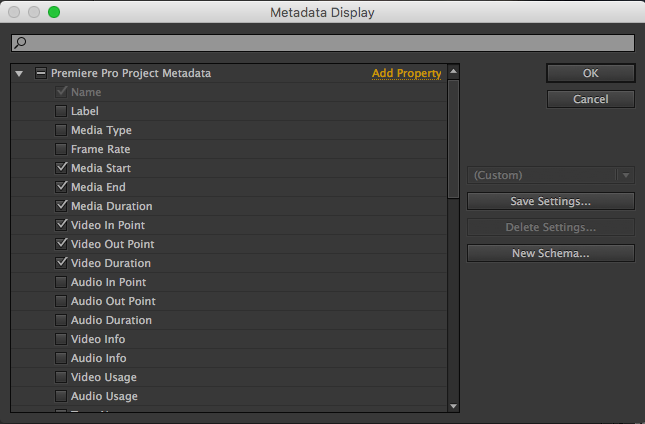
In premiere you can access all of the metadata for your individual shots. This allows you (the editor) to easily organize your footage and make it easier to sort through what you want and what you want to cut out. With my footage, I started out by selecting which info I wanted to be displayed about the footage. For example, I know all of my footage was shot at 24fps, so this didn't need to be shown.
After that, I went through my footage library, and previewed each shot to see what it was. I then named the shot based on either what it showed, or the type of shot (establishing, tracking etc.). This has helped a lot as my footage is no longer a load of numbered files but rather something I can scan through and quickly find what is appropriate to my sequences.
This is what the module and preview window looks like, and you can see how easily it is to pick out a specific shot and add it to my sequence.
Tuesday, 4 October 2016
Shot Types
The premise of this task was to research different shot types and to then use them to create a demonstration video of each one, ranging from types of framing to movements in shot.
Tuesday, 13 September 2016
Editing Technology
The development of editing technology
During the infancy years of moving image, all projections were just of one static shot and it ran for as long as there was film in the camera. The first cuts were used to establish continuity, like continuing action from one shot to the next. One of the first times this was done was in 1898's "Come Along, Do!", where a couple are outside an exhibition having lunch and then walk inside, and the camera cuts to them inside the building. This style of editing was done by literally cutting the strip of film and sticking it back together, which is where the name 'cutting' comes from in film.
In 1924, Iwan Serrurier invented the Moviola, which was a device that allowed the editor to view the film while cutting up the segments. Now, instead of looking at the film infront of a light and estimating where a good cut point was, you could get a much more precise idea of where to cut and thus helped push editing in a more efficient and sophisticated direction. Even today, amidst all the technological advances, some editors prefer to use this method, such as Michael Kahn who received an Oscar nomination for editing in Spielberg's 'Munich'.
Next were flatbed editors, which featured separate disks that you load film and magnetic tape (for audio) into. This meant that the audio and video tracks could be edited separately but most of the time they were synchronized with the help of a Clapperboard, which the editor would use to sync the action of the board snapping with the noise, and then the rest of the film would be synced the same.
Non-Linear editing systems work in a copy and paste form and allow editors to cut and edit footage without actually working with the original material. This meant that instead of having to get it right first time because there was only one copy of the film, they could experiment more without the negatives of destructive editing. On the other hand, Linear video editing is a form of sequential editing. Often used for tape recordings, the editor goes through the footage, and records segments onto a master tape. This clips are recorded in order and a negative of this technique is that you can't go back and insert a clip in the sequence without completely starting again.
Offline editing is the stage of editing where the footage is modified without the original footage being affected. This is done by importing the raw footage which can be thousands of hours long and then converting or digitizing it. The editors can then arrange it and then the online editing can begin, which is the final stage and has been largely replaced by video editing software. The process affects the original footage which is why there are stages before it to make sure everything is as it should be.
Over the last few years, software like Final Cut and Premier Pro have provided aspiring film makers a cheaper alternative to the usually expensive editing tools. The main user base for these are hobbyists, but some major films have been edited on them. An example is The Social Network which won an Oscar for best editing, that was edited on Final Cut Pro.
Monday, 12 September 2016
Easy Rider Analysis
In this clip from Easy Rider (1969), two couples take acid and the scene uses multiple techniques to represent what the resulting effects are. The clip's use of these techniques is experimental and immerses the viewer into the world, giving a direct point of view to allow a more personal experience.
The clip starts with a wide shot of all four people sat down, and you start to get a sense that they are distressed. The woman on the far left kisses her guy, and the guy on the right is shaking his head. Pair this with the fact that the camera is static and you can decode that they are bored, have nothing better to be doing with their time, and are just hanging around for the sake of it. One man then proceeds to get out pills and they all take one. The shot doesn't cut, nor does the camera move, but continues to stay static. This allows the audience to take in all the small emotions, movements and reactions. This also infers that the group is very calm when taking the drugs. The camera isn't shaking or even handheld so there isn't a sense of panic behind something illegal. When asked what the pill is, the man with them says "nevermind, just shut up and take it" which further shows that he doesn't care about it.
In the background, there is diegetic noise off camera which sounds like the thumping of industrial equipment. It is rhythmic and plays through the whole clip and it adds an unusual sense of urgency and grit to the clip. The noise isn't far from the beat of a heart, and so even though the sound is distinctly machine-made, it adds a human quality to the audio. On the other hand though, the sound seems dangerous, like it is looming in the background. In this way, it also seems to act as a caution, or at least something to warn the viewers that something isn't right. Not long after they take the pills, there are short inter-cut clips of the outside of a building, which is the first time anything is shown but the static shot of the group. The cuts are paired with non diegetic audio of a woman speaking a Christian prayer or passage. This creates a juxtaposition between good and bad: religion tends to focus on making yourself a good person, namely to get into heaven, but the group are drinking and taking drugs. This creates an interesting dynamic as the short cuts are to show the resulting effects of the drugs they have taken.
The cuts between the shots get more frequent and last longer as supposedly the drugs start to take more of an effect and the camera pans up the building so that the sun shines right into the camera. This makes the screen very bright and gives a feeling of being overwhelmed, like everything is building and becoming more prominent. After this, we start to cut to a variety of different things, like the woman reciting the dialogue who is shown with a low angle close up shot. She dominates the screen for a second but now her voice is drowned out by a combination of the industrial thumping noise, ambient noises and somebody else speaking. This implies that everything is being drowned out in the group's heads, like their focus keeps shifting and they are being flooded with sensory inputs. There is a brief shot of the sun behind trees, and the camera focus shifts so the sun quickly comes out of focus, further playing into the feeling of being overwhelmed.
The man who originally got the pills says "shut up" in a very rapid shot of him leaning against a statue. This may be because he's feeling discomforted with his high, and wants the voices to stop. The montage of shots has an emphasis on religious iconography, such as a mid shot of a priest or minister and a zooming out shot of a small Jesus figure on a cross that pans up the building toward the sky. Also, the scene is set in a graveyard which results in some gritty images that give the scene a harrowing and dark presence. You see a woman taking her clothes off, and the next shot is of her lying in the graveyard naked. The adds to a theme of sinning that runs through the scene, starting with them drinking and taking drugs.
Subscribe to:
Posts (Atom)


